Keeping Austin Schools Looking Their Best with Fresh Paint
Austin schools deal with a lot. Heat that cracks exterior coatings by July. Humidity that warps trim and bubbles ceilings. Graffiti that shows up overnight. And wear patterns that turn high-traffic hallways into scuffed-up disasters by November. Paint isn't cosmetic here—it's structural defense. When it's done right, it protects surfaces, keeps buildings functional, and signals to students, parents, and staff that someone's paying attention.
Fresh paint also does something quieter but just as important. It resets the environment. A classroom that looks tired doesn't inspire much. A hallway covered in marks and chips tells students the space doesn't matter. But when walls are clean, colors are intentional, and surfaces are maintained, the building itself becomes part of the educational experience. That's not theory—it's what we see every time a school gets a refresh.
What Paint Actually Protects
Most people think paint is about color. It's not. It's about creating a barrier between your building materials and everything trying to destroy them. Austin's weather is relentless. UV exposure fades and degrades surfaces. Moisture seeps into cracks and feeds mold. Temperature swings cause expansion and contraction that split untreated materials over time.
Interior paint handles a different set of problems. Constant contact from hands, backpacks, desks, and chairs wears down walls faster than most administrators expect. Without a durable finish, you're looking at repairs instead of repaints. And when that happens, costs multiply. Here's what quality paint actually shields your facility from:
- Sun damage that breaks down exterior substrates and fades school colors into unrecognizable shades
- Moisture infiltration that rots wood, rusts metal, and creates conditions for mold growth in hidden areas
- Surface abrasion from daily use that turns walls into eyesores within a single semester
- Graffiti and vandalism that becomes nearly impossible to remove without the right base coat
- Chemical exposure from cleaning products that can strip or discolor improperly sealed surfaces
Low VOC Matters More Than You Think
Old-school paints off-gassed for weeks. Volatile organic compounds would linger in classrooms, triggering headaches, respiratory issues, and allergic reactions. In a building full of kids, that's a nonstarter. Modern low-VOC and zero-VOC formulations have changed the game. They dry faster, smell less, and don't compromise indoor air quality.
Austin schools that prioritize low-VOC products aren't just checking a compliance box. They're creating healthier spaces where students and staff can breathe easier—literally. This is especially critical in older buildings where ventilation systems may not be up to current standards. Choosing the right paint means fewer complaints, faster turnarounds, and classrooms that are usable the next day instead of the next week.
Color Choices That Do More Than Decorate
Walk into most schools and you'll see beige. Beige walls, beige hallways, beige everything. It's safe, it's neutral, and it's boring. Color psychology isn't pseudoscience—certain hues genuinely affect focus, energy, and mood. Thoughtful color selection can make classrooms more conducive to learning and common areas more welcoming.
Bright accent walls can energize creative spaces. Calming blues and greens work well in areas meant for concentration or testing. School colors in gymnasiums and entryways build pride and identity. The key is balance. Too much stimulation becomes distraction. Too little becomes sterile. Here's how smart color strategy plays out in Austin schools:
- Warm tones in younger grade classrooms to create inviting, comfortable environments that reduce anxiety
- Cool tones in testing areas and libraries to promote calm focus and minimize overstimulation
- Bold accent walls in art rooms and maker spaces to encourage creativity and risk-taking
- School colors in athletic facilities and main entrances to reinforce community identity and pride
- Neutral bases with strategic pops of color to maintain flexibility while avoiding visual monotony
Scheduling Around the School Year
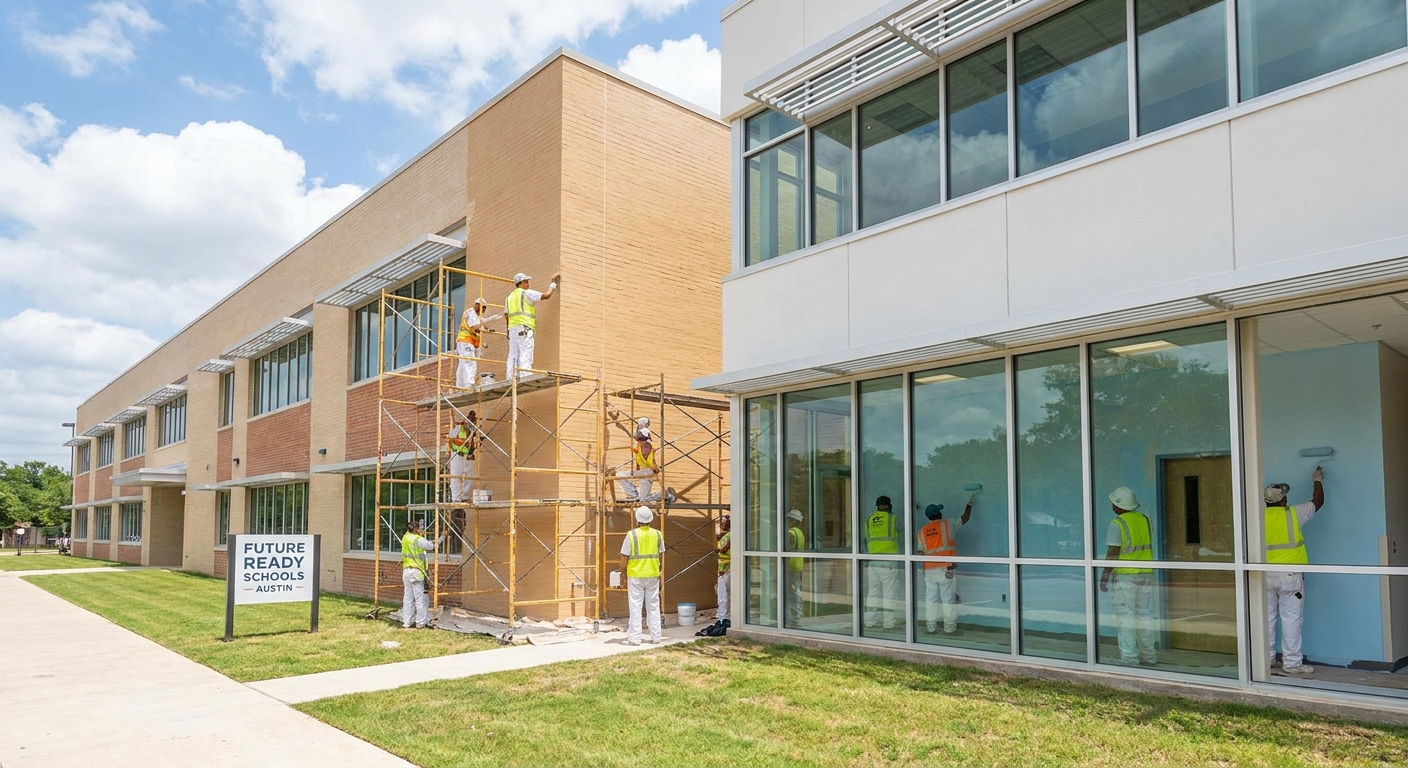
Painting during the school year is a logistical nightmare. Fumes, wet surfaces, blocked hallways, and noise all interfere with instruction. Summer break is the obvious window, but it's also when every other school is trying to book contractors. That's why planning ahead matters. Schools that lock in schedules six months out get better rates, more availability, and less stress.
For urgent fixes—water damage, vandalism, safety hazards—you need a contractor who can work fast without cutting corners. That means pros who understand school environments, have the right insurance, and can coordinate with facility managers to minimize disruption. Timing isn't everything, but it's close.
Exterior Work Needs Different Priorities
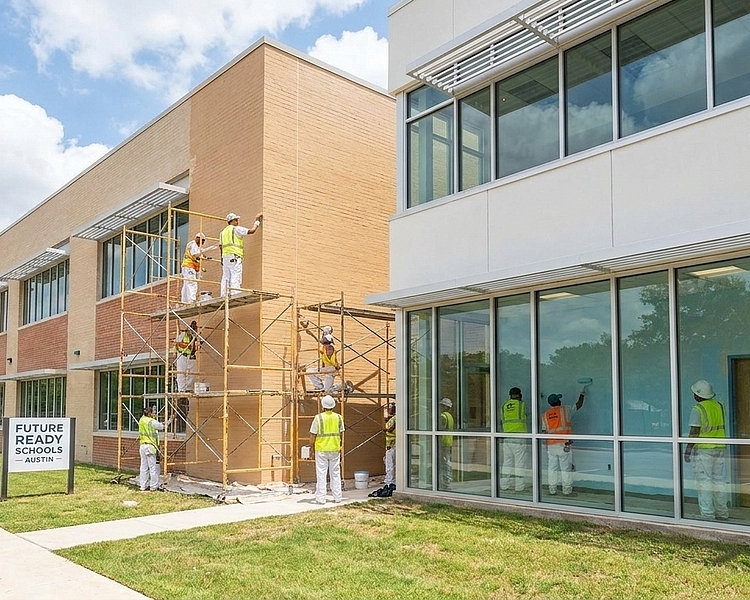
What works inside doesn't always work outside. Exterior coatings have to handle direct sun, driving rain, and temperature extremes. They need UV inhibitors, mildew resistance, and elasticity to handle substrate movement. Cheap exterior paint fails fast in Austin's climate—cracking, peeling, and fading within two years instead of lasting seven to ten.
Surface prep is even more critical outdoors. You can't paint over dirt, loose material, or failing coatings and expect good results. Power washing, scraping, priming, and patching come first. Skipping those steps is why most bad paint jobs fail early. Here's what separates a exterior project that lasts from one that doesn't:
- Thorough surface cleaning to remove dirt, mildew, and chalking before any coating is applied
- Repairs to damaged substrates including wood rot, rusted metal, and deteriorated stucco or masonry
- Quality primers formulated for the specific substrate and environmental conditions
- Top-grade paints with UV blockers, mildew inhibitors, and elastic properties for thermal movement
- Proper application techniques including adequate dry time between coats and attention to weather conditions
When DIY Doesn't Cut It
Parent volunteers can handle small touch-up projects. They're great for murals, accent walls, and community engagement. But large-scale repaints—especially exteriors, gymnasiums, or cafeterias—require professional crews. It's about efficiency, safety, and results. A crew of three professionals will outpace twenty volunteers and deliver a finish that actually lasts.
Professionals also carry insurance, know how to handle lead paint in older buildings, and understand OSHA requirements. They have the equipment to reach high ceilings and exterior upper floors safely. And they know how to troubleshoot problems like moisture issues, substrate incompatibility, and adhesion failures before they become expensive do-overs.
Documentation That Saves Money Later
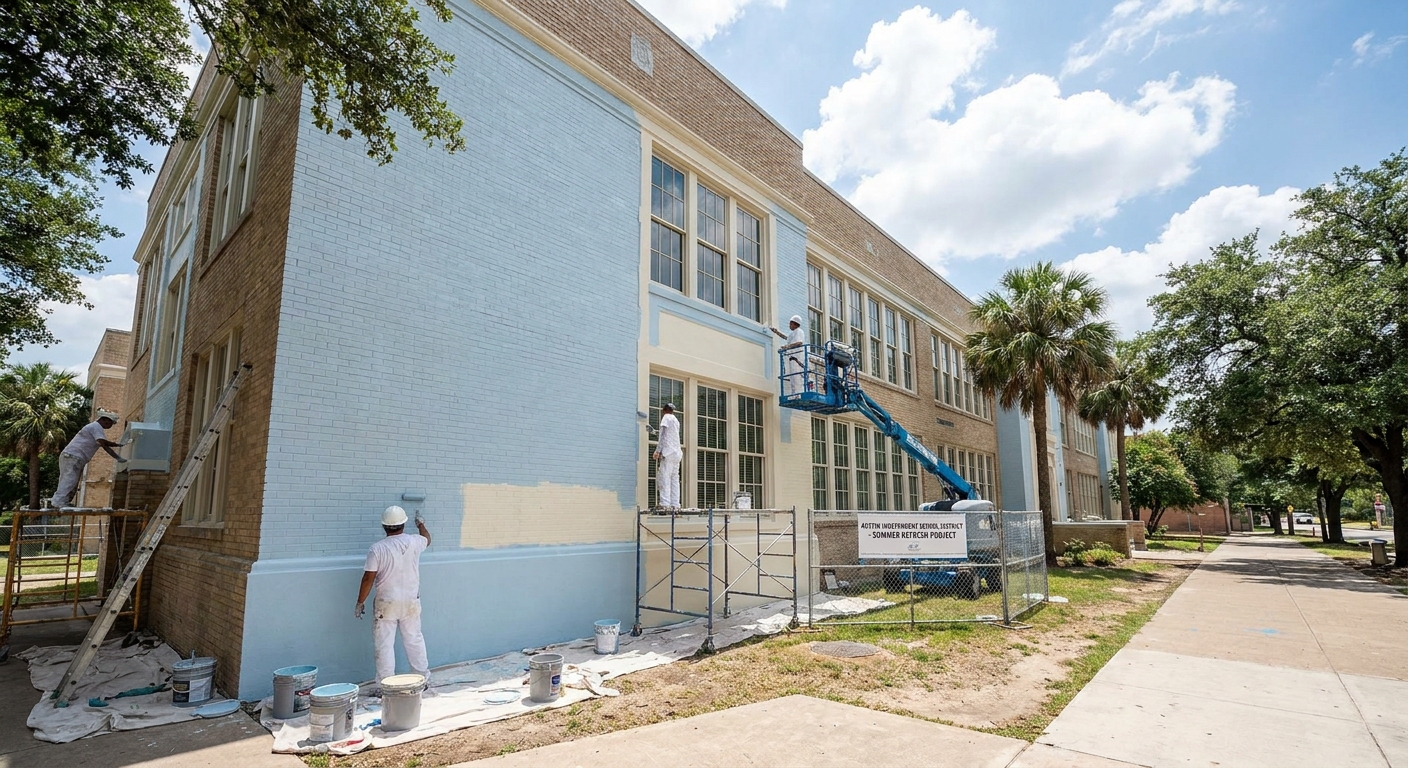
Every paint project should come with records. What products were used, which surfaces were prepped, when the work was completed. This isn't bureaucracy—it's asset management. When you know the last time a building was painted and what was used, you can plan maintenance cycles, budget accurately, and avoid redundant work.
- Detailed scope of work including all surfaces, prep steps, and product specifications
- Before and after photos of every area covered by the project
- Product data sheets and warranty information for paints and coatings used
- Invoices and payment records tied to specific phases or areas of work
- Inspection reports or sign-offs confirming completion and quality standards
Budget Realities and Long-Term Value
Painting costs money. But neglect costs more. Deferred maintenance turns small problems into big ones. A hallway that could have been refreshed for a few thousand dollars becomes a full restoration project requiring drywall replacement, mold remediation, and structural repairs. The districts that stay ahead of maintenance cycles spend less over time and avoid the chaos of emergency projects.
Grant funding and community partnerships can offset costs. Local businesses often sponsor projects in exchange for recognition. PTAs and booster clubs fundraise for specific improvements. And some contractors offer discounted rates for schools or nonprofits. The key is planning early and exploring all available resources instead of waiting until the budget is already spent.
Bringing It All Together
Austin schools don't need to look tired. Fresh paint is one of the highest-impact, lowest-cost improvements a district can make. It protects infrastructure, improves air quality, boosts morale, and signals to everyone who walks through the doors that the school is cared for. Whether it's a full exterior repaint, classroom refreshes, or targeted repairs, the investment pays off in ways that go far beyond aesthetics. Plan smart, hire right, and keep your facilities looking like they matter—because they do.
Let’s Give Your School a Fresh Start
We know how much a well-maintained, vibrant environment means for Austin’s students and staff. If your school is ready for a transformation that lasts, let’s make it happen together. Reach out to us at 512-677-2397 or get a quote and see how we can help your campus look its best for years to come.
‹ Back
Recent Posts
-
Keeping Austin Schools Looking Their Best with Fresh Paint
September 16, 2026
-
Giving Austin Offices a Fresh Look with Professional Repainting
September 2, 2026
-
Exterior Painting in Austin for Homes With Fading Siding
August 19, 2026
-

-