
Can Interior Painting in Austin Make Small Rooms Feel Bigger?
Small rooms are a reality for most Austin homeowners. Tight bedrooms, cramped offices, narrow hallways — they're everywhere. But here's the thing: you don't need to tear down walls or gut the place to make a space feel bigger. Paint does the heavy lifting if you know how to use it. The right color can push boundaries outward. The wrong one can shrink a room before you've even moved the furniture in.
We've seen it happen over and over. A client walks into a freshly painted room and swears the square footage changed. It didn't. The walls just stopped closing in. That's what happens when you treat paint as a spatial tool, not just decoration. Austin's light is intense, our ceilings vary wildly, and our architectural quirks demand strategy. So let's break down what actually works — and what's just noise.
Light Shades Open Everything Up
Bright tones reflect more of the sun that pours through Austin windows. That reflection doesn't just brighten a room — it makes the walls feel like they're receding. Soft whites, pale neutrals, and barely-there pastels do this better than anything else. They're not trendy. They're functional. And when your room is ten by ten, function matters more than flair.
We're not saying you have to go sterile. Warm whites with undertones of creamones of cream or beige can still feel cozy without swallowing the space. Cool grays work beautifully if your room gets harsh afternoon sun. The key is keeping the value high — meaning the color stays close to white on the spectrum. Go too saturated, and you've lost the effect.
Finish Type Changes the Game
Flat paint absorbs light. Glossy paint bounces it around. If you want a room to feel bigger, you need that bounce. But full gloss is overkill for most spaces and highlights every dent and ding in your drywall. We typically steer clients toward satin or eggshell finishes — they give you enough sheen to amplify light without turning your walls into mirrors.
Austin's humidity also plays a role here. Higher-sheen finishes hold up better in moisture-prone areas like bathrooms and kitchens, and they're easier to wipe clean. That durability pays off when you're working with a small room that sees heavy use.
One Bold Wall Creates Depth
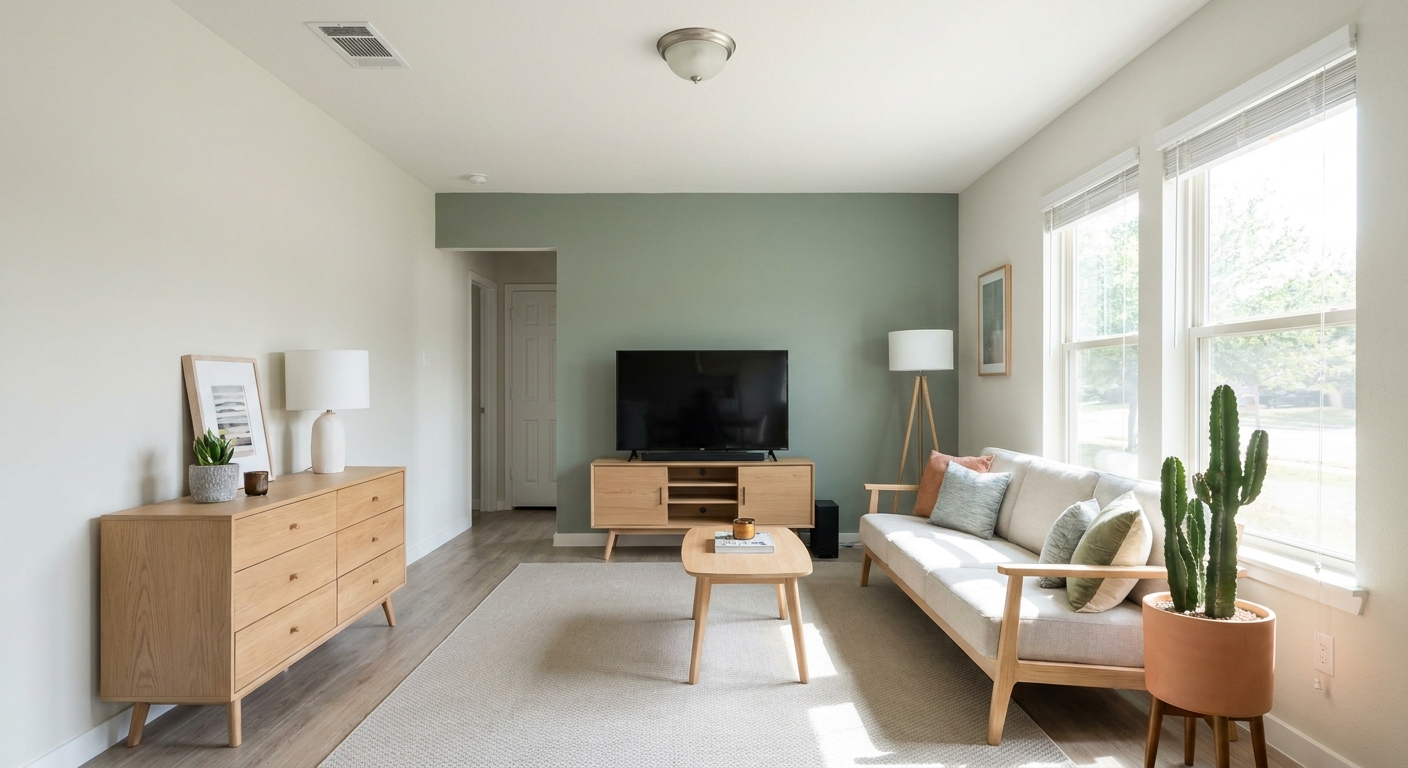
Painting every surface the same pale shade is safe, but it can also flatten a room. We've found that one darker or richer accent wall — especially the one farthest from the door — can trick the eye into seeing more dimension. It's a visual anchor that makes the other walls feel like they're pulling away from it.
In Austin homes, earthy tones like terracotta, olive, or muted navy work well as accents. They complement the natural light without overwhelming the space. Just don't go rogue and paint all four walls dark unless you're trying to create a cave. Balance is everything.
Ceiling Color Adds Vertical Space
Most people default to white ceilings. That's fine. But if your ceilings are low or your room feels compressed, painting the ceiling a shade lighter than the walls can lift the entire space. The eye reads it as height, even when the tape measure says otherwise.
We've also used the reverse trick in rooms with soaring ceilings that feel disconnected from the floor. A slightly darker ceiling brings the proportions back in line. Either way, don't ignore the fifth wall. It's doing more work than you think.
Monochromatic Palettes Unify the Space
When you stick to one color family and vary only the intensity, the room reads as a single, cohesive volume instead of a collection of competing surfaces. That continuity makes small rooms feel more expansive because there's no visual interruption.
In practice, this might mean painting walls in a soft gray, trim in a crisper white-gray, and doors in a mid-tone gray. The gradient keeps things interesting without fracturing the space. It's subtle, but it works — especially in Austin homes where open layouts blur one room into the next.
Natural Light Deserves Priority
Austin gives us sun for most of the year. Wasting that resource is a mistake. Light-reflective paints maximize what's already coming through your windows. Pair that with minimal window treatments and strategically placed mirrors, and you've amplified your square footage without spending a dime on construction.
We tell clients to think about light direction too. North-facing rooms get cooler, softer light — warm paint tones can balance that. South-facing rooms are flooded with brightness — cooler shades prevent them from feeling harsh.
When to Skip the DIY Route
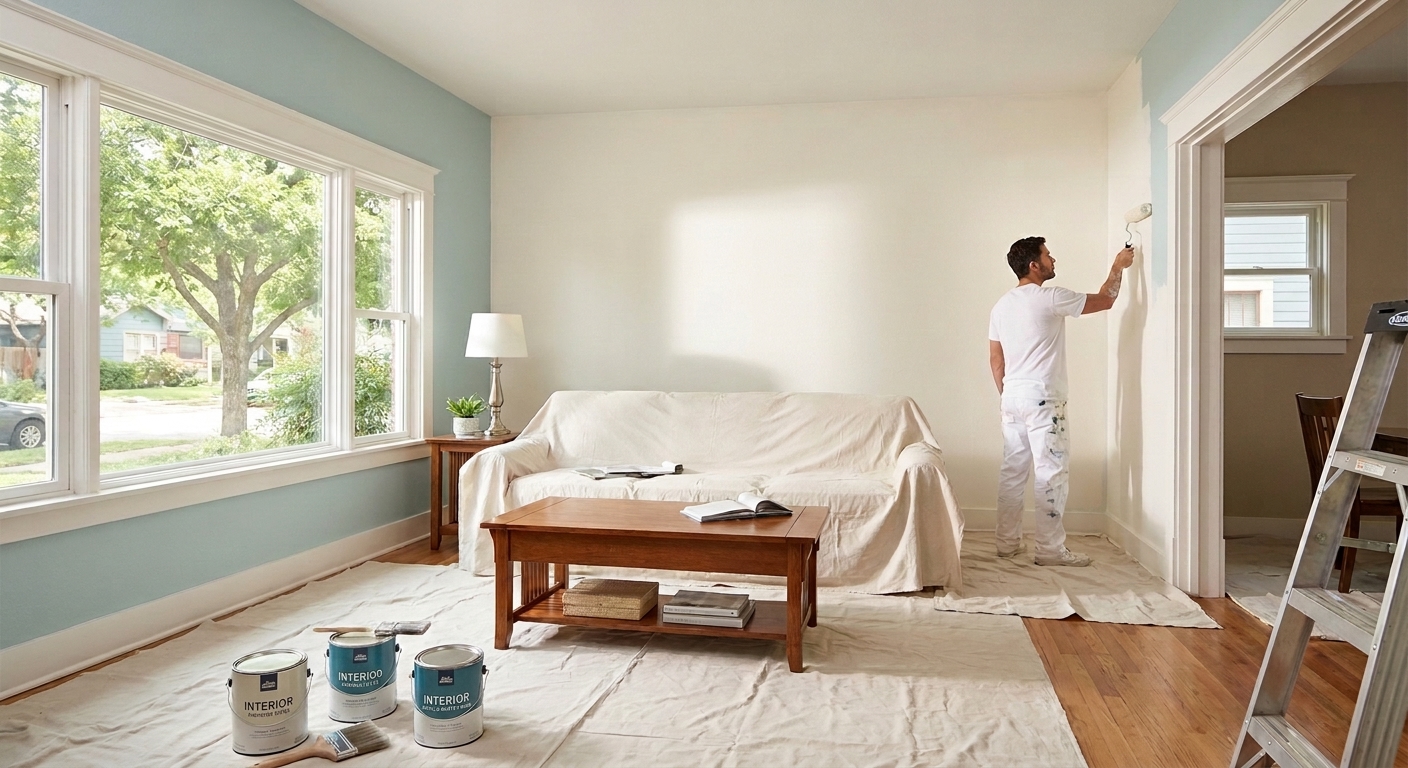
Painting a small room sounds simple until you're dealing with tight corners, uneven surfaces, and trying to keep lines crisp around trim. Professional painters know how to prep walls so the finish is smooth, how to cut in without tape bleeding, and how to match colors under Austin's specific lighting conditions.
We've also seen too many DIY jobs where the wrong primer was used or the paint was applied too thick, leaving a patchy, uneven surface that actually makes the room feel smaller. When the goal is expansion, execution matters. A bad paint job does the opposite of what you're trying to achieve.
Common Mistakes We Keep Seeing
Homeowners make predictable errors when painting small rooms, and most of them shrink the space instead of opening it up. Here's what trips people up most often:
- Choosing paint based on a tiny swatch under store lighting instead of testing it in the actual room
- Painting trim and walls the same dark color, which eliminates depth and dimension
- Ignoring the ceiling and leaving it dingy or yellowed, which drags the whole room down
- Using too many accent colors, which fractures the space and makes it feel chaotic
- Skipping primer, especially over bold existing colors, leading to uneven coverage and wasted coats
Color Choices That Work in Austin Homes
Not every trendy palette translates well to Central Texas living. Our climate, light quality, and architectural styles favor certain colors over others. Here's what we've found consistently expands small rooms:
- Soft whites with warm undertones for south- and west-facing rooms
- Cool grays for spaces that get intense afternoon sun
- Pale blues and greens that echo the Hill Country landscape
- Creamy neutrals that pair well with natural wood and stone finishes
- Light taupe tones that add warmth without weight
Tools That Make a Real Difference
If you're set on tackling this yourself, the tools you use determine whether the room feels bigger or just looks freshly painted. Quality brushes prevent streaking. Good rollers give you even coverage. Painter's tape that actually seals keeps your lines sharp. Here's what belongs in your kit:
- High-quality angled brushes for cutting in around trim and corners
- Microfiber rollers for smooth, even coverage without texture
- Primer designed for your specific wall surface and existing paint
- Paint with built-in primer for minor color changes
- Extendable roller poles to reach ceilings without a ladder
Techniques That Expand Visual Space
Beyond color selection, how you apply paint can influence perception. We use a few tricks that consistently make small Austin rooms feel more open:
- Painting trim slightly lighter than walls to create separation and depth
- Extending wall color onto door frames to blur boundaries
- Using horizontal stripes in lighter and slightly darker shades to widen narrow rooms
- Painting built-ins and shelving the same color as walls to make them recede
- Keeping baseboards low-contrast so the eye travels upward instead of stopping at the floor
What Professional Painters Bring to the Table
Hiring a pro isn't just about convenience. It's about getting a result that actually achieves the goal. We know which primers block stains, which finishes hold up in Austin's heat, and how to handle texture without making a small room feel busy. We also move faster, waste less paint, and leave you with clean lines that don't need touch-ups a week later.
More than that, we help you avoid costly mistakes. The wrong color can set you back hundreds in wasted materials and time. A professional consultation upfront saves you from repainting the same room twice.
Testing Before Committing
Never choose a final color based on a chip alone. Buy sample pots and paint large swatches on multiple walls. Live with them for a few days. Watch how they look in morning light, afternoon glare, and evening lamplight. What feels expansive at noon might look dingy at dusk.
We tell clients to paint samples near windows, in corners, and next to existing furniture. Context changes everything. A color that opens up a bare wall might clash with your couch or feel harsh next to natural wood trim.
Why This Matters More Than You Think
Small rooms don't have to feel suffocating. Paint is one of the most affordable, reversible ways to change how a space functions and how you feel in it. In Austin, where real estate is tight and every square foot counts, making a room feel bigger isn't just aesthetic — it's practical. It affects your mood, your productivity, and whether guests feel comfortable or cramped when they visit.
We've walked enough homeowners through this process to know that the difference between a room that breathes and one that chokes often comes down to a single gallon of the right paint. Don't underestimate what color can do. And don't leave it to chance when the outcome matters this much. Residential painting services can transform tight spaces into areas that feel open and inviting. Whether you need drywall repair and patching before painting or cabinet painting and refinishing to complete the look, professional expertise ensures every detail contributes to expanding your space. For comprehensive solutions beyond walls, explore our painting services to see how we can help maximize every room in your home.
Ready to Open Up Your Space?
Let’s make your small rooms feel bigger, brighter, and more inviting with the right paint choices and expert application. We’re here to help you transform your Austin home so every inch works for you. Give us a call at 512-677-2397 or get a quote and let’s start planning your next project together.
‹ Back
Recent Posts
-
Can Interior Painting in Austin Make Small Rooms Feel Bigger?
October 28, 2026
-
Commercial Painting in Austin for Offices That Need a Refresh
October 14, 2026
-
Can Pressure Washing in Austin Help Paint Last Longer?
September 30, 2026
-
Keeping Austin Schools Looking Their Best with Fresh Paint
September 16, 2026
-
Giving Austin Offices a Fresh Look with Professional Repainting
September 2, 2026