Can Pressure Washing in Austin Help Paint Last Longer?
Most property owners in Austin think paint just fades on its own. Sun, rain, repeat. But there's a lot more at play — and if you ignore it, you're shortening the life of every coat on your exterior. Paint doesn't just break down from UV exposure. It gets attacked by dirt, pollen, mold, and organic buildup that Austin's climate delivers year-round. That layer of grime isn't just ugly. It's destructive.
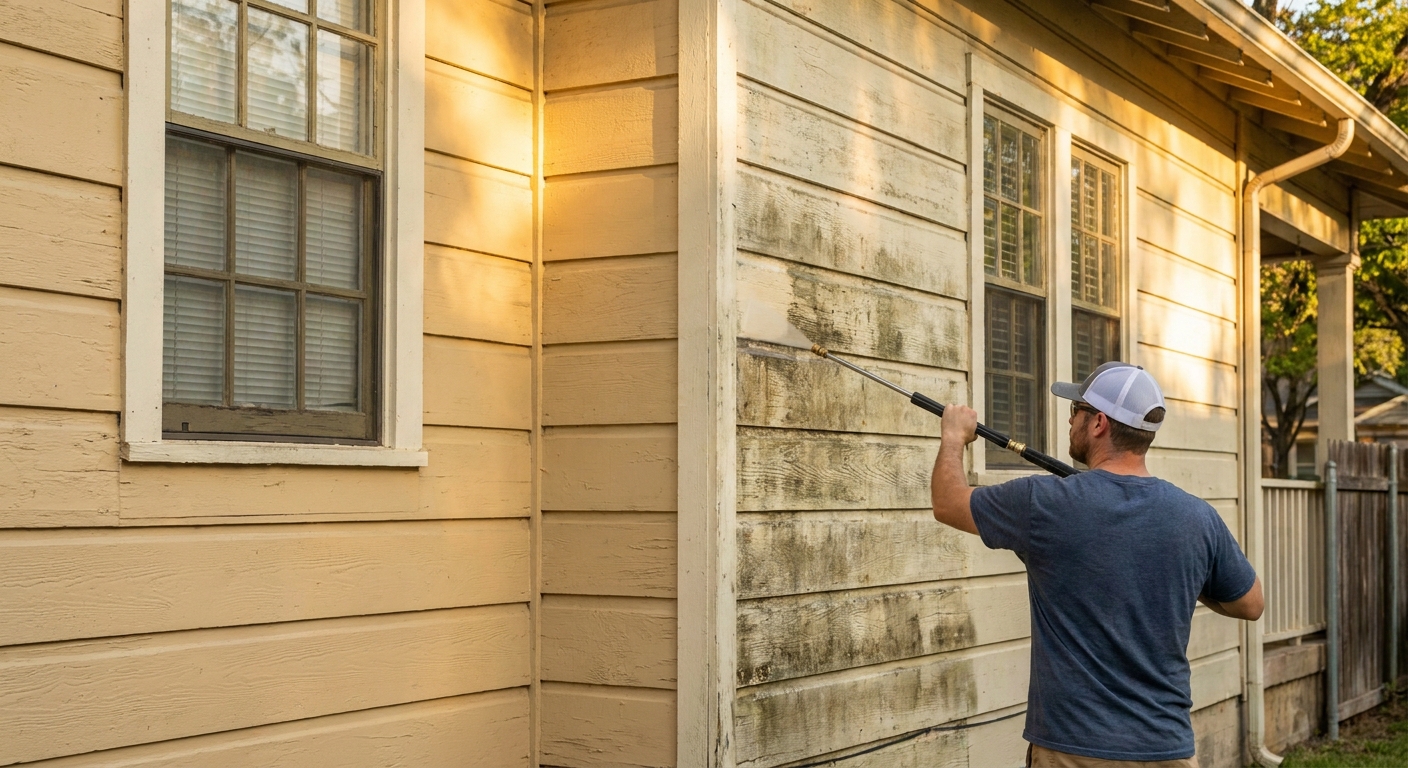
So here's what matters. If you want paint to last longer, you need to treat the surface underneath like it's part of the investment — because it is. Every contaminant left sitting is a risk. Every streak of mildew is a countdown. And every cleaning decision should be based on what actually protects the substrate, not just what makes it look better for a week.
Austin Weather Doesn't Do Paint Any Favors
We deal with triple-digit summers, flash storms, and pollen counts that coat everything in sight. That combination puts constant stress on exterior finishes. The heat expands paint, the moisture seeps in, and the organic matter feeds mold growth that eats away at adhesion over time.
And it's not just the elements. Cedar pollen in spring, drought conditions in summer, humidity spikes after storms — all of it builds up on siding, trim, and any painted surface exposed to the elements. Left unchecked, that buildup accelerates cracking, peeling, and color loss. You can't stop the weather, but you can stop letting debris pile up on top of your finish.
What High-Pressure Cleaning Actually Does
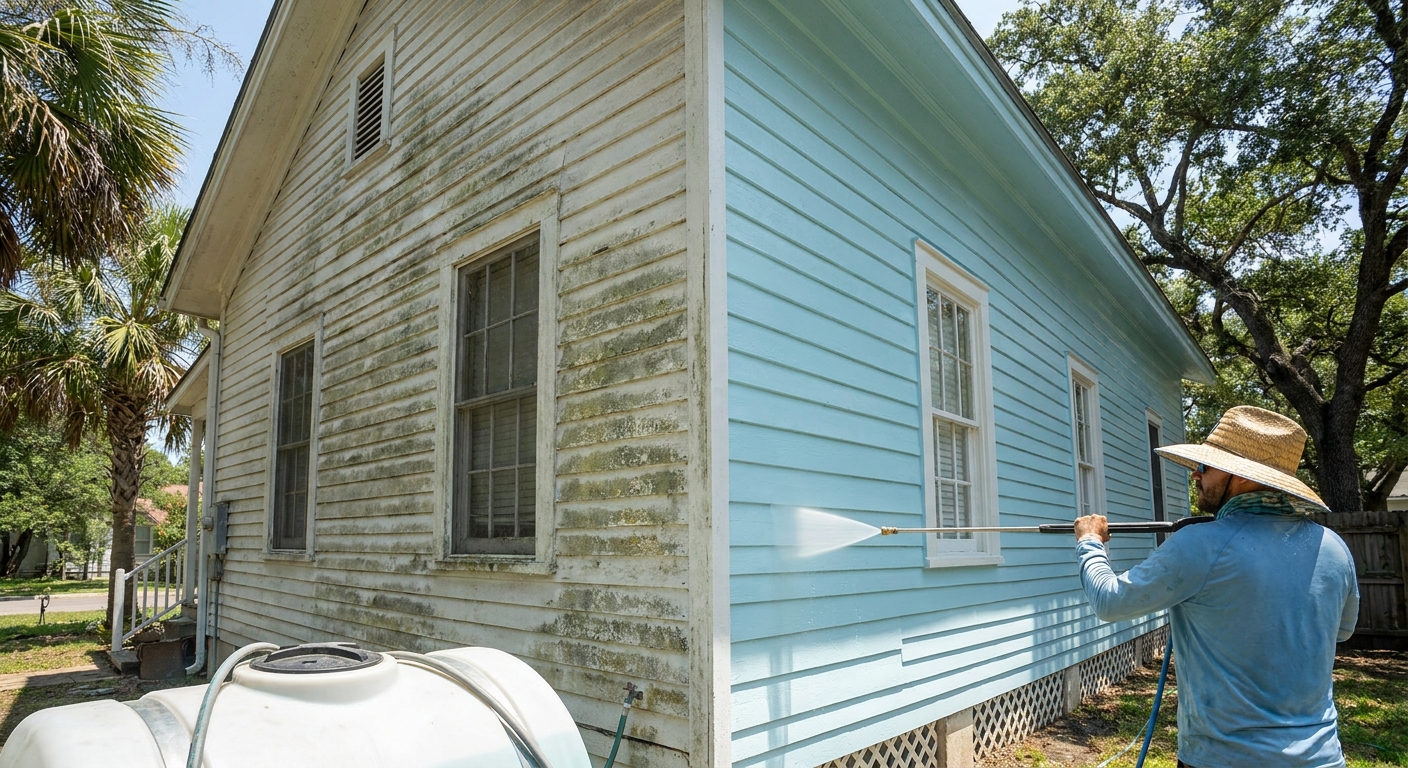
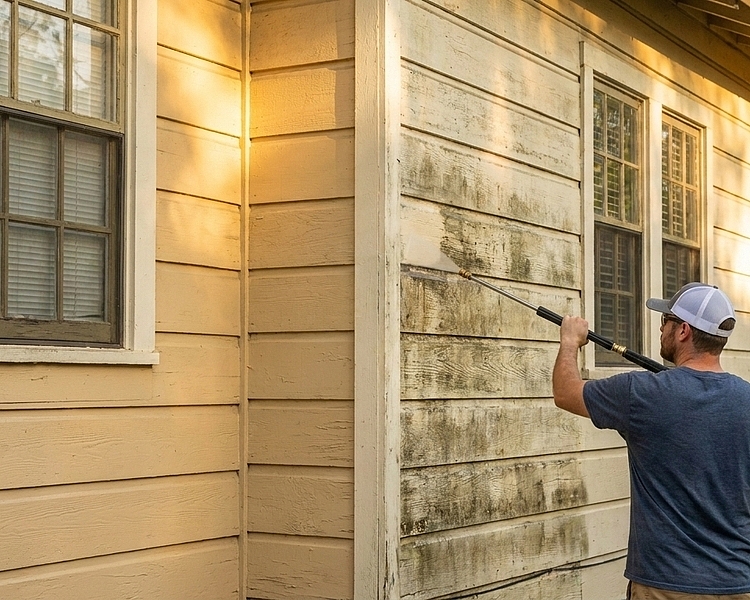
Pressure washing blasts away the layer of contamination that ordinary rinsing won't touch. It strips off mold, mildew, algae, dirt, and oxidation without requiring harsh scrubbing or chemical stripping. When done right, it clears the surface down to the paint itself — or sometimes down to bare material if the paint was already failing.
The goal isn't just cosmetic. A clean surface sheds water better, resists biological growth longer, and gives new coats something solid to bond with. It's prep work and preservation rolled into one step, as long as you're not treating it like a blunt instrument.
Why Cleaning Extends the Life of Your Finish
Contaminants don't just sit on top of paint. They hold moisture against it, create micro-scratches, and break down the binder that holds pigment in place. Once that deterioration starts, it accelerates. What looked like a little discoloration turns into peeling within a season or two.
Here's where pressure washing before painting makes a real difference:
- Mold and mildew get blasted off before they dig into the finish and compromise adhesion
- Pollen and organic residue that trap moisture get cleared away, letting paint breathe and dry properly
- Oxidation and chalking — the powdery breakdown that happens with age — get removed so the remaining finish stays intact longer
- Dirt and grime layers that block proper drainage or airflow get eliminated, reducing the chance of trapped moisture causing bubbling or rot underneath
- Loose or flaking sections get identified early, so you can address them before they spread and require a full repaint
The Right Pressure Keeps Paint Intact
You can't just crank up the PSI and expect good results. Too much force will tear paint off, gouge wood siding, or drive water behind the surface where it doesn't belong. The trick is using enough pressure to clean without enough to damage.
For most painted exteriors, that means staying under 2,000 PSI and using a wide-angle nozzle. The spray pattern should fan out, not concentrate into a pinpoint jet. Distance matters too — hold the wand at least a foot back, and angle it so water flows down and away, not up under seams or trim edges. If you're getting paint chips or seeing bare substrate, you're going too hard.
What Happens When You Skip the Details
The biggest mistake is treating every surface the same. Vinyl siding can handle more pressure than old wood clapboard. Fresh latex needs a lighter touch than oil-based enamel that's been curing for years. And if the paint is already compromised — cracked, peeling, or blistering — pressure washing might expose the damage rather than prevent it.
Another common error? Using the wrong cleaning agent or skipping a rinse. Some detergents leave a residue that actually attracts dirt faster. Others can discolor or weaken certain paint types. If you're adding chemicals to the mix, make sure they're compatible with your finish and that you're flushing them completely off the surface afterward.
When DIY Turns Into a Liability
Renting a machine and going after your siding sounds straightforward until you're halfway through and realize you've etched the paint or blown water into your wall cavity. The learning curve is steeper than most people expect, and the cost of fixing damage usually outweighs what you saved on labor.
A pro knows how to adjust pressure on the fly, which nozzles work for what material, and how to spot trouble before it becomes a bigger issue. They also carry insurance, which matters when a slip sends 3,000 PSI into a window or through a soffit vent. If your paint job is worth protecting, it's worth hiring someone who won't accidentally destroy it in the process.
How Often Austin Properties Should Get Cleaned
Once a year is the baseline for most homes and commercial buildings in this climate. If you're near heavy tree cover, dealing with a lot of shade and moisture, or located in a high-pollen zone, twice a year makes more sense. The idea is to stay ahead of buildup before it turns into a maintenance crisis.
Don't wait until the siding looks visibly dirty. By that point, the damage is already happening underneath. Regular cleaning keeps the cycle from starting and gives you a chance to catch small paint failures before they require exterior painting services. Think of it as cheap insurance against expensive fixes down the road.
What to Look for in a Pressure Washing Service
Not every company that owns a pressure washer knows how to use it on painted surfaces. You want someone who understands surface prep, paint chemistry, and when to dial back the aggression. Ask about their process, what equipment they use, and whether they adjust their approach based on your specific siding and finish type.
Here's what separates the pros from the weekend warriors:
- They inspect the surface first and flag any areas where paint is already failing
- They use variable pressure settings and multiple nozzle types depending on the material
- They apply cleaning agents designed for exterior finishes, not generic degreasers or household soaps
- They rinse thoroughly and check for water intrusion or damage after the job
- They can point out spots that need touch-up or repair before the next paint cycle
The Prep Step Most People Skip
If you're planning to repaint soon, pressure washing before painting your home is non-negotiable. New paint won't bond to dirt, chalk, or mildew. It'll look fine for a few months, then start peeling as soon as the weather shifts. A proper wash removes all that interference and gives the new coat a fighting chance.
Even if repainting isn't on the calendar, cleaning before you apply sealers, stains, or topcoats makes a massive difference in how long they last. Surface prep isn't glamorous, but it's the difference between a finish that holds up for years and one that fails in the first rainy season.
Keep the Surface Clean and the Finish Holds
Paint protection isn't about buying premium products or recoating every couple of years. It's about keeping the surface free of the stuff that breaks paint down in the first place. Pressure washing does that faster and more thoroughly than any other method, as long as you're using the right pressure, the right technique, and the right timing. Austin's climate will always be tough on exteriors, but that doesn't mean you have to accept early failure as inevitable. Clean the buildup, protect the substrate, and your paint will outlast the competition by a wide margin.
Let’s Protect Your Paint for the Long Haul
We know how much effort goes into keeping your property looking sharp in Austin’s challenging climate. If you want your paint to last and your exterior to stay protected, let’s tackle the grime before it becomes a problem. Give us a call at 512-677-2397 to talk through your needs, or get a quote and see how we can help your paint job stand the test of time.
‹ Back
Recent Posts
-
Can Pressure Washing in Austin Help Paint Last Longer?
September 30, 2026
-
Keeping Austin Schools Looking Their Best with Fresh Paint
September 16, 2026
-
Giving Austin Offices a Fresh Look with Professional Repainting
September 2, 2026
-
Exterior Painting in Austin for Homes With Fading Siding
August 19, 2026
-