
What is the Best Way to Remove Wallpaper in Your Austin Home?
Most homeowners think wallpaper removal is just about peeling and scraping. Pull it off, clean up, move on. But if you've ever dealt with decades-old adhesive baked onto plaster in a Texas summer, you know better. Wallpaper doesn't just come off — it fights back. And if you don't approach it with the right tools and strategy, you're looking at damaged drywall, wasted hours, and a mess that spreads across three rooms.
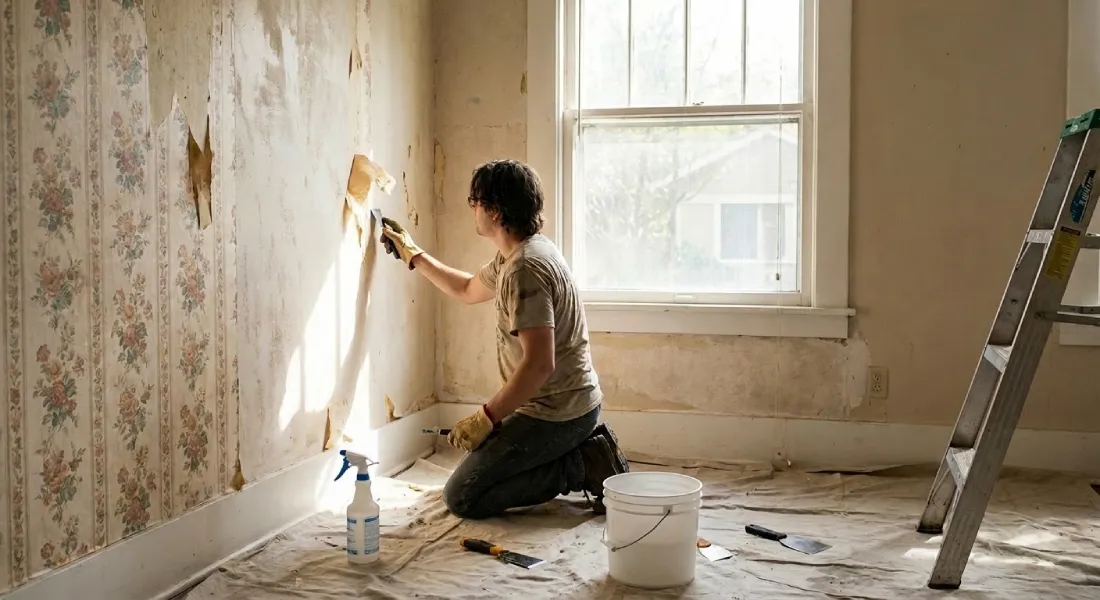
So here's what matters. If you're stripping walls to refresh your space, that's great. Just don't assume every wallpaper behaves the same way. Some peel clean. Others require soaking, scoring, and serious elbow grease. Every layer tells a story about who lived there before — and every removal method depends on what's underneath.
Not All Wallpaper Comes Off the Same Way
Before you grab a scraper and start tearing, figure out what you're working with. Some wallpaper is strippable — designed to peel away without leaving much behind. Others are vinyl-coated, fabric-backed, or glued down with industrial-strength paste that's been sitting there since the '70s. Austin homes, especially older ones near Hyde Park or Clarksville, often have multiple layers stacked on top of each other. That's not just annoying — it changes your entire approach.
Test a corner first. Lift it with a putty knife and see what happens. If it peels smoothly, you're in good shape. If it tears into tiny shreds or refuses to budge, you'll need to score it, soak it, and work in sections. Don't skip this step. Guessing wrong costs you time and wall integrity.
The Tools That Actually Matter
You can't strip wallpaper with a butter knife and a prayer. You need the right setup, or you'll spend twice as long getting half the results. Here's what belongs in your kit:
- Putty knife or wide scraper with a flexible blade
- Wallpaper scoring tool to perforate the surface
- Spray bottle or garden pump sprayer for solution application
- Bucket filled with hot water
- Commercial wallpaper stripper or a vinegar-water mix
- Drop cloths to protect your floors from drips and debris
- Rubber gloves to keep your hands from drying out
- Ladder if you're dealing with high ceilings or crown molding
How to Strip It Without Wrecking Your Walls
Wallpaper removal isn't complicated, but it does require patience. Rush it, and you'll gouge drywall or leave adhesive smeared everywhere. Follow this sequence and you'll save yourself a lot of frustration.
Start by clearing the room. Move furniture, cover the floor, and pull off outlet covers. Then score the wallpaper with a scoring tool — this creates tiny holes that let your removal solution penetrate the adhesive layer. Don't press too hard or you'll damage the wall underneath. Next, mix your solution. Commercial strippers work well, but a 50-50 mix of white vinegar and hot water does the job for most papers. Spray or sponge it on generously and let it soak for at least ten minutes. The paper should start to bubble or darken when it's ready.
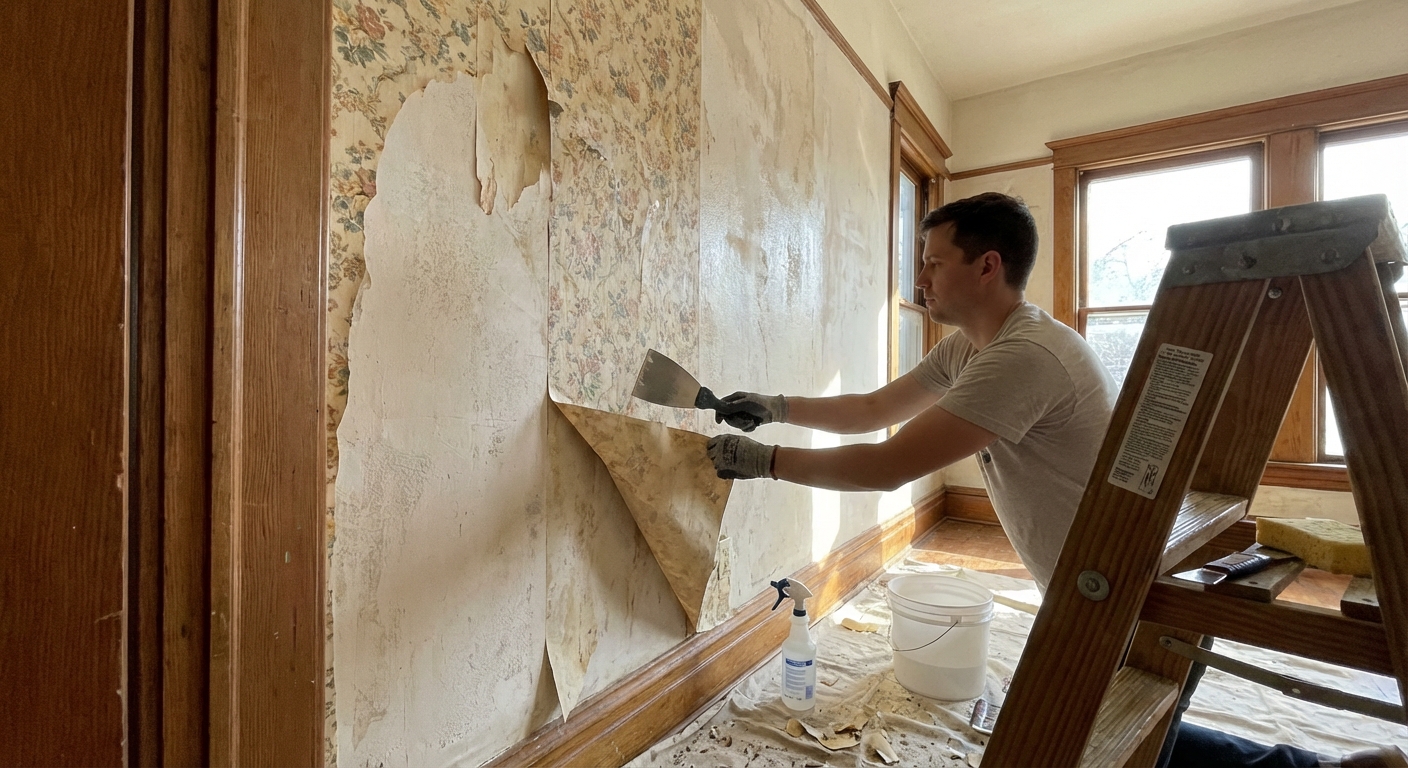
Now scrape. Start at a seam or corner and work your putty knife under the paper at a low angle. Peel slowly and keep the blade flat to avoid digging into drywall. If the paper resists, reapply solution and wait longer. Once the paper is off, you'll likely see leftover paste. Scrub it down with warm soapy water and a sponge. For stubborn residue, hit it with more stripper or a dedicated adhesive remover. Finally, inspect the walls. Patch any nicks or gouges with spackle, let it dry, sand smooth, and wipe clean before you paint or hang new paper.
Austin Humidity Changes the Game
Texas heat and humidity affect how wallpaper behaves — and how fast your removal solution evaporates. If you're working in July with no AC, that solution dries out before it can do its job. Work in smaller sections and keep reapplying as needed. Open windows and run fans to improve airflow, especially after you've soaked the walls. This helps them dry faster and prevents mold from creeping in behind the drywall.
Older Austin homes often have plaster walls instead of drywall. Plaster is harder but also more brittle. Use a lighter touch when scraping and avoid metal tools on delicate surfaces. If your house was built before 1978, test for lead paint before you start tearing into anything. Lead dust is a real hazard, and disturbing old layers without proper precautions can put your family at risk.
What Slows Most People Down
We see the same mistakes over and over. Here's where most DIY jobs go sideways:
- Skipping the scoring step and wondering why the solution doesn't work
- Using cold water instead of hot, which weakens the adhesive breakdown
- Scraping too aggressively and tearing up drywall paper
- Not letting the solution soak long enough before scraping
- Forgetting to remove adhesive residue, which causes paint to peel later
When DIY Turns Into a Bigger Problem
Some wallpaper removal jobs are beyond what a weekend warrior should tackle. If you're staring at three or four layers, each glued down with different adhesives, that's a red flag. Same goes for extensive wall damage, crumbling plaster, or paper that's been painted over. Professionals have commercial steamers, industrial strippers, and the experience to handle tricky substrates without destroying your walls.
They also work faster. What takes you a full weekend might take them a few hours. If you're flipping a house, prepping for a sale, or just don't want to spend your Saturday scraping paste, calling in a pro makes sense. Get quotes, check reviews, and make sure they're insured. A bad removal job can cost more to fix than it would've cost to hire someone competent in the first place.
Prepping for What Comes Next
Once the wallpaper is gone, your walls need attention before you can paint or hang new covering. Wash down every surface to remove dust and residue. Let everything dry completely — this is especially important in humid climates like Austin's. Prime the walls with a good-quality primer to seal any remaining adhesive and create a smooth base. If you skip this step, you'll see bleed-through, uneven texture, and paint that doesn't adhere properly.
Check for imperfections. Fill holes, cracks, and gouges with spackle or joint compound. Sand smooth once dry, then wipe with a damp cloth to remove dust. Now you're ready for interior painting, texture, or apply new wallpaper. The prep work isn't glamorous, but it's what separates a clean finish from a sloppy one.
Common Questions We Hear
Here's what homeowners ask most often:
- Can I paint over wallpaper instead? Technically yes, but it's risky. Seams will show, edges may lift, and moisture can cause bubbling. Removal is almost always the better choice.
- How long does removal take? Depends on the wallpaper type, wall condition, and room size. A single room with strippable paper might take a few hours. Multiple layers on plaster could take a full day or more.
- Will I damage my walls? Not if you're careful. Use the right tools, don't rush, and keep your scraper angle low. Plaster and older drywall require extra caution.
- Do I need a steamer? Not always. Steamers work well on stubborn adhesive, but a good removal solution and patience often do the trick without the extra equipment.
Why Shortcuts Cost More Later
Trying to save time by skipping steps or using the wrong tools almost always backfires. You'll end up with torn drywall, adhesive smears, or walls that aren't ready for paint. Fixing those mistakes takes longer than doing it right the first time. If you're not confident in your ability to handle the job, don't fake it. Get help, rent the right equipment, or hire someone who knows what they're doing.
Wallpaper removal isn't rocket science, but it does require attention to detail and a willingness to work methodically. Austin's older homes add extra variables — humidity, plaster walls, multiple layers — that make the job trickier than it looks. If you need drywall repair and patching after removal, or want to explore residential painting services to complete your project, professional help ensures quality results. For homeowners tackling other updates like cabinet painting and refinishing or popcorn ceiling removal, the same principle applies: respect the process, use the right approach, and your walls will be clean, smooth, and ready for whatever comes next.
Let’s Make Your Walls Shine Again
Wallpaper removal can be a hassle, but you don’t have to tackle it alone. We know Austin homes inside and out, and we’re ready to help you get your walls prepped for a fresh start—without the stress or mess. If you’re ready to transform your space, give us a call at 512-677-2397 or get a quote and let’s get your project moving.
‹ Back
Recent Posts
-
Commercial Painting in Austin for Offices That Need a Refresh
October 14, 2026
-
Can Pressure Washing in Austin Help Paint Last Longer?
September 30, 2026
-
Keeping Austin Schools Looking Their Best with Fresh Paint
September 16, 2026
-
Giving Austin Offices a Fresh Look with Professional Repainting
September 2, 2026
-
Exterior Painting in Austin for Homes With Fading Siding
August 19, 2026